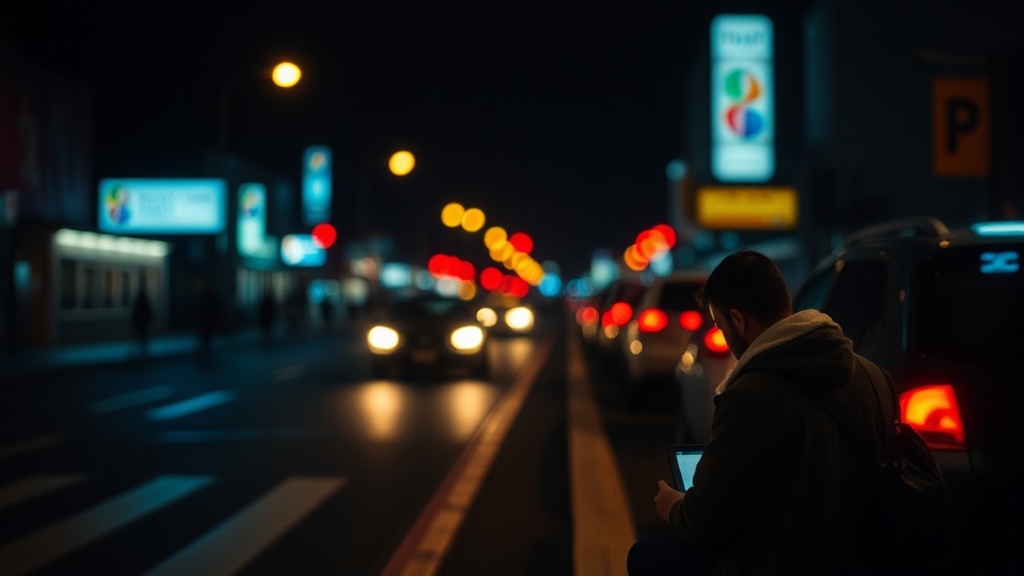
The Quiet Case for Slowing Down in a World That Can't Stop Scrolling

Most of us believe that productivity means doing more—faster, smarter, with better apps and tighter schedules. We've convinced ourselves that a packed calendar equals a meaningful life, and that any moment not "optimized" is a moment wasted. But what if this relentless pursuit of efficiency is actually stealing the very thing we're trying to create: a life that feels good to live?
This isn't another lecture about digital detoxes or abandoning technology. It's an honest look at how the pace of modern life—especially in a connected city like Halifax—affects our daily experience, and why intentionally slowing down might be the most practical lifestyle choice you make this year.
Why does everything feel so rushed even when we have time-saving devices?
We've outsourced our laundry, our grocery shopping, even our dog walking to apps and services. Yet somehow, we feel busier than ever. There's a paradox at play here—one that The Atlantic explored in depth regarding how technology promised us leisure but delivered fragmentation instead.
The truth is, time-saving tools don't automatically create space. They often just invite more activity into the gaps. When you can answer emails while waiting for coffee, you do. When your phone makes it possible to work from anywhere, everywhere becomes a workplace. The boundary between "on" and "off" hasn't just blurred—it's disappeared entirely.
In daily life, this shows up as the Sunday scaries that start Saturday evening. It's the inability to watch a full movie without checking your phone. It's the nagging sense that you should be doing something productive even when you're supposedly resting. We're not living our lives so much as managing them—ticking boxes, responding to notifications, maintaining a low-grade anxiety that this isn't quite how it was supposed to feel.
What does "slowing down" actually look like in practice?
Let's be clear: slowing down isn't about quitting your job or moving to a remote cabin (though if that's your thing, no judgment). It's about reclaiming the texture of your days—the sensory details, the unhurried moments, the capacity to be present without calculating what's next.
Consider the morning routine. For many, it's a frantic dash from alarm to out-the-door, fueled by coffee and cortisol. But what if you gave yourself an extra twenty minutes—not to be more productive, but to be more human? To actually taste your breakfast, to notice the quality of light in your kitchen, to have a conversation with the people you live with that isn't about logistics?
Research from the American Psychological Association suggests that chronic rushing and time pressure are significant contributors to stress-related health issues. The body doesn't distinguish between "good" stress and "bad" stress—it just knows it's under pressure. Slowing down, even in small increments, activates the parasympathetic nervous system, which helps regulate everything from digestion to sleep quality.
The practical application varies by lifestyle. For a parent, it might mean leaving buffer time between activities so you're not constantly racing. For someone working remotely, it might mean creating actual boundaries—closing the laptop at a set time, taking real lunch breaks away from the desk. For everyone, it means recognizing that being busy isn't the same as being fulfilled.
How can you build slowness into a life that demands speed?
This is where intention becomes everything. You can't wait for life to slow down—you have to build the brakes yourself. And while that sounds like adding another task to your list, it's actually about subtracting: removing the friction, the unnecessary commitments, the digital noise that consumes attention without providing value.
Start with your environment. The spaces we inhabit shape our internal state more than we acknowledge. A cluttered, chaotic home creates a cluttered, chaotic mind. This isn't about achieving Pinterest perfection—it's about creating enough order that your surroundings aren't constantly demanding your attention. The New York Times reported on studies linking tidy spaces to reduced anxiety and improved focus, noting that visual clutter competes for cognitive resources whether we realize it or not.
Next, examine your relationship with technology—not as a moral failing, but as a design problem. Apps are engineered to capture and hold attention. They're not neutral tools; they're sophisticated persuasion systems. Slowing down requires interrupting their momentum. This might mean grayscale mode on your phone, app timers, or simply keeping devices in another room during certain hours. The goal isn't Luddism; it's reclaiming agency.
Then there's the social component. Our relationships often suffer from the same rushed quality as our schedules. We text instead of call, multi-task during conversations, postpone real connection until some future date when we're "less busy." But connection—real, present-tense connection—requires time. It requires being where you are, with who you're with, without an exit strategy.
The small rituals that anchor slowness
Rituals create rhythm—they signal to the nervous system that it's safe to settle in. They don't need to be elaborate. Making coffee with a pour-over instead of a Keurig. Taking the longer walking route to work. Reading physical books before bed instead of scrolling. These aren't affectations; they're anchors—small declarations that how you do things matters as much as what you do.
In Halifax, where the ocean and the seasons provide their own pacing, there's an opportunity to align with natural rhythms rather than artificial urgency. The city has a particular quality—busy enough to offer stimulation, small enough to permit escape. You can walk the waterfront at lunch, take the ferry without checking your email, spend Saturday morning at the farmers market without a strict agenda.
What you're actually making room for
Here's what happens when you stop treating every moment as a productivity opportunity: you start noticing things again. The quality of light in the afternoon. The specific way someone laughs. The satisfaction of a task done well rather than done quickly. This isn't nostalgia for a simpler time—it's reclaiming the sensory data that makes life feel real rather than virtual.
There's also space for the uncomfortable stuff we'd rather scroll past. Boredom. Uncertainty. The vague sense that we don't quite know what we're doing with our lives. These feelings don't resolve through distraction—they resolve through sitting with them, which requires the very slowness we're talking about. It's not always pleasant, but it's honest. And honesty—about where we are, what we want, what's actually working—creates the foundation for real change.
The irony of slowing down is that it often makes you more effective, not less. When you're not operating from a constant state of urgency, decisions improve. Creativity surfaces. The frantic energy that produces quantity without quality starts to recede. You remember that you're allowed to enjoy your life while you're living it—not just in retrospect, not just during vacations, but in the ordinary Tuesday afternoon that you're experiencing right now.
So try it. Not as a resolution or a challenge, but as an experiment. See what happens when you move through one day without rushing. When you finish what you're doing before starting something else. When you let the unscheduled moments exist without filling them. You might find that what you've been searching for—clarity, calm, a sense of actually being present in your own life—has been waiting in the spaces you keep trying to optimize away.